

Property taxes in Dubai in 2026: when buying, owning and selling a flat in the UAE
There is no property tax in Dubai. This is true, and it is the most costly misconception a buyer can have. In the first year of owning a flat worth 2 million dirhams, the owner pays more than 5 per cent of its value to the government, the management company and estate agents. It’s just that none of these payments is called a tax.
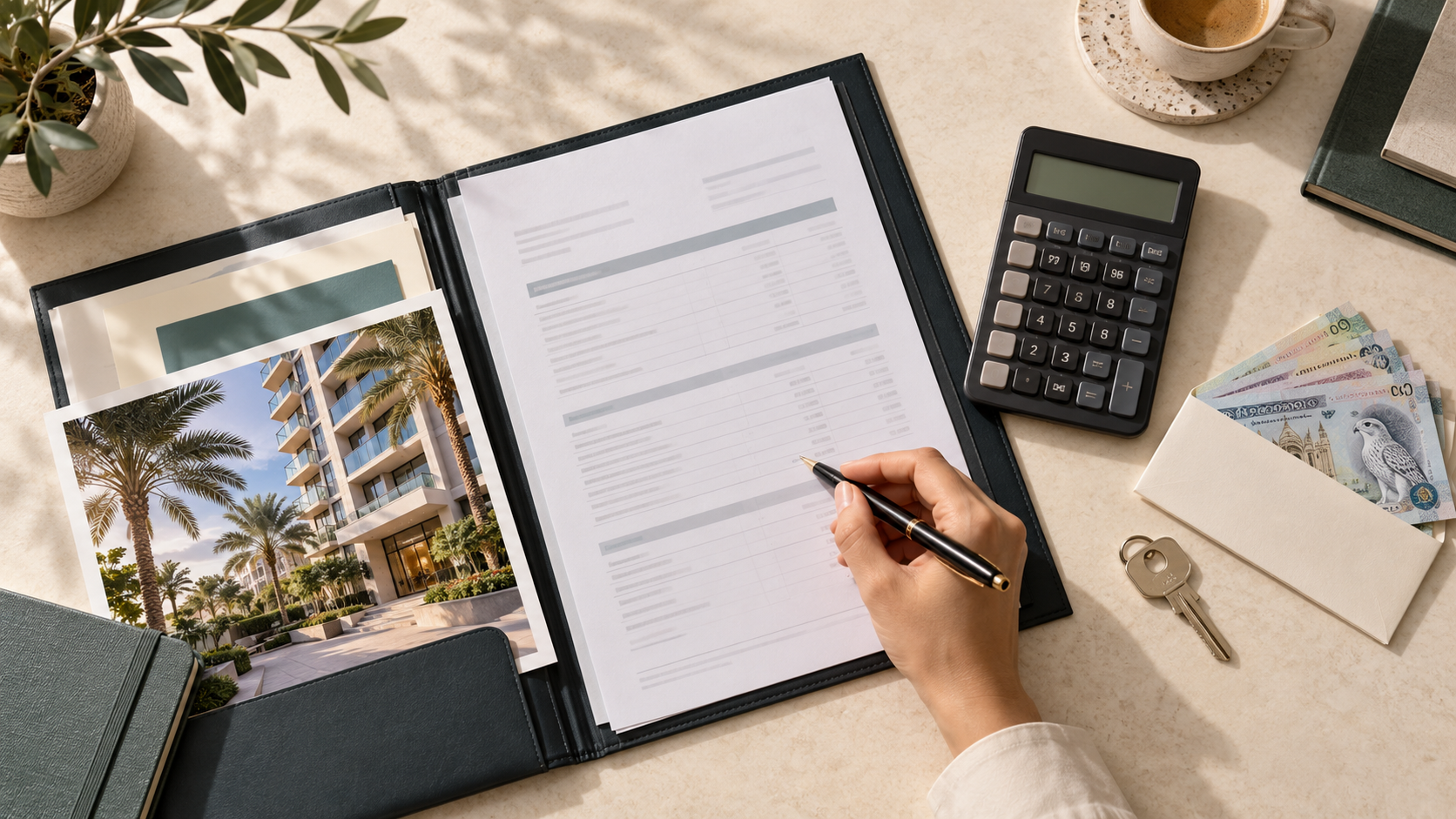
By 2026, the system had become established. The UAE Tax Authority confirmed that an individual’s income from letting and selling property is not subject to corporation tax if the owner does not hold a licence for this type of activity. The double taxation agreement between Russia and the UAE has been in force since 1 January 2026. Furthermore, since February 2025, banks have stopped including registration fees and estate agent’s commissions in mortgage payments, meaning these costs have become more noticeable to buyers.
In this article, we break down the four categories of payments that are often lumped together in conversation as a single ‘tax’: taxes themselves, registration fees payable to the state, commissions to intermediaries, and property maintenance costs. We also examine separately why ‘zero’ in the UAE does not mean ‘zero’ for the owner, and what depends on their tax status. The figures are approximate and are based on September 2026. Tax matters relating to your own country should be confirmed with a consultant who works with both jurisdictions.
Four layers of payments: how tax differs from a fee
The word ‘tax’ is used in Dubai’s advertising to refer to everything at once: the registration fee upon purchase, the agent’s commission, and payments to the management company. These are different things with different characteristics. A tax is levied by the state on a regular basis and is not linked to a specific service. A fee is a one-off payment to the state for a specific action. A commission is a payment to an intermediary under a contract. Maintenance costs relate to the property itself. It depends on the category whether a payment can be reduced, passed on to another party or avoided. Four categories on a single screen:
| Layer | Who receives it and when | Examples | Can it be avoided |
|---|---|---|---|
| Taxes | The state, either regularly or on a one-off basis | 5% VAT, 5% local tax, 9% corporation tax | Depends on status and ownership structure |
| Fees | Land Department and Immigration Service, one-off payment upon transaction | DLD fee 4 per cent, mortgage registration 0.25 per cent, Ejari | No, but can be shared with the seller |
| Commissions | Agent, property manager, bank, valuer, as per contract | Agent’s commission 2 per cent, property management 5–8 per cent of the rent | Yes, if you do it yourself |
| Maintenance | Building management company, DEWA, insurer, on a regular basis | Maintenance charges, air conditioning, utilities | No, but the amount depends on the building |
Taxes: what Dubai has and what it doesn’t
The list of taxes that do not exist in Dubai is long, and this really works in an individual’s favour. There is no annual property tax, no tax on rental income, no capital gains tax on sales, and no inheritance tax. Flat owners only pay tax on income that the government has decided to tax indirectly. What does exist:
- 5% VAT. This applies to services relating to the flat and to commercial property. Residential lettings and the resale of residential property are exempt from VAT.
- A municipal levy of 5 per cent of the annual rental value. Formally a levy, but in essence a tax on occupancy. It is charged via the DEWA bill to the person living in the flat.
- Corporate tax: 9 per cent. This applies to companies that own property and does not apply to individuals without a licence.
- Tourist levy for short-term lettings: 10–20 dirhams per room per night, payable by the guest.
- Tax in the owner’s country of tax residence. This is the largest of all and the only one that is not mentioned in Dubai.
VAT: 0%, exempt or 5%
VAT has been in force in the UAE since 2018 at a rate of 5 per cent, and for residential property it is structured in three tiers. The difference between a ‘zero rate’ and an ‘exemption’ is significant for the developer, whilst for the buyer both options mean there is no VAT included in the price. VAT applies wherever a service is provided: by an estate agent, a valuer, a solicitor or a property management company. How this is allocated:
| Transaction | VAT | Explanation |
|---|---|---|
| First sale of a new flat by the developer | 0% | Zero rate for three years following completion of the building |
| Resale of property | Exempt | VAT not included in the price |
| Long-term letting of property | Exempt | No VAT on rent |
| Sale and let of commercial property | 5% | Offices, shops, warehouses |
| Agent’s commission, valuation, legal services | 5% | Calculated as a percentage of the commission amount |
| Management company service charges | 5% | Charged by the management company in addition to the standard rate |
| Registration office services for the transaction | 5% | 4,000 dirhams becomes 4,200 |
Practical conclusion: when budgeting for a purchase, VAT is calculated not on the price of the flat, but on the commission and services. For a flat costing 1.5 million dirhams, this amounts to around 1,800 dirhams, not 75,000.
5% municipal levy: a tax referred to as a levy
Dubai Municipality charges 5 per cent of the annual rental value of the property. The payment is not invoiced separately: it is divided into twelve instalments and added to the monthly DEWA bill for electricity and water. It is paid by the person living in the flat, not the owner. For the tenant, the amount is calculated based on the tenancy agreement registered with Ejari. For an owner living in their own flat, the municipality assesses the rental value itself using data from the register and the RERA index. For a flat with an annual rent of 90,000 dirhams, this amounts to 4,500 per year or 375 dirhams per month. What is important for the owner:
- A let flat. The levy is included in the tenant’s DEWA bill and does not affect the owner’s return on investment.
- Owner-occupied flat. The levy is paid by the owner based on the assessed rental value.
- An unoccupied flat. If the DEWA account is in the owner’s name, the levy is charged to them based on the assessed value.
- Changes to the tenancy. Following the renewal of the tenancy agreement at a different rate, the amount is not always recalculated automatically, so it is worth checking the bill.
- Commercial premises are not subject to this levy; they are taxed separately via VAT.
9% corporation tax: when it applies to a flat
Corporate tax has been in force in the UAE since 2023: 0% on profits up to 375,000 dirhams and 9% above that. For a flat owner, the key question is whether rental income is subject to this tax. The answer depends on the form of ownership. An individual who lets out their property without a licence is not subject to corporate tax — this is enshrined in Cabinet Decision No. 49 of 2023 and a clarification issued by the tax authority in 2024. This exemption applies regardless of the number of flats or the amount of income, and there is no need to register with the tax authorities. Hiring a property management company does not alter this status. When is tax payable:
- The flat is registered in the company’s name. A company in the UAE pays 9 per cent on profits exceeding 375,000, registers with the tax authorities and submits an annual tax return regardless of the amount of income.
- A company in a free zone owns residential property on the mainland. Income from such property is not eligible for the tax exemption and is taxed at 9 per cent without the 375,000 threshold. This is the most costly mistake in structuring.
- A foreign company owns property in the UAE. Income from this property is deemed to be income sourced in the UAE and is subject to corporation tax.
- Licensed activities. If the owner obtains a licence for property management or hotel operations, the income becomes business income.
Practical conclusion: purchasing one or two flats through a company for the sake of ‘asset protection’ in 2026 creates a tax and reporting burden that an individual would not face. The structure should be discussed with a tax adviser before the transaction.
Registration fees: one-off payments to the state
Registration fees are what are most often mistaken for a ‘purchase tax’. They are one-off payments made to the Land Registry and its partners; whilst they cannot be avoided, they can be shared with the other party to the transaction. The main one is a fee of 4 per cent of the price upon transfer of title. By law, this is split equally between the buyer and the seller; in market practice, however, it is paid in full by the buyer, and the allocation is set out in Form F prior to the transaction. Full list as at September 2026:
| Fee | Amount | When |
|---|---|---|
| Registration of the transfer of title (DLD) | 4 per cent of the price plus 580 dirhams | When purchasing a ready-built property |
| Registration of a new-build contract (Oqood) | 4 per cent of the price plus an administrative fee | When buying from a developer |
| Registration office services | 4,000 dirhams plus VAT for properties priced at 500,000 or above; 2,000 plus VAT for properties below that | Upon completion of the transaction |
| Issue of title deed | 250 dirhams | Upon completion of the transaction |
| Mortgage registration | 0.25% of the loan amount plus 290 dirhams | When purchasing on credit |
| Registration of the Ejari tenancy agreement | Approximately 220 dirhams | For each tenancy agreement |
| DEWA connection deposit | 2,000 dirhams per flat, refundable | When opening an account |
| Visa fees when applying for a residence permit linked to the flat | Approximately 10,000 dirhams per applicant | When applying for a visa |
When the flat is sold, these fees are paid by the next buyer. The seller is only responsible for providing a certificate from the developer confirming that there are no outstanding debts (NOC), 500–5,000 dirhams, and the agent’s commission, if stipulated in their contract.
Commissions: payments to intermediaries
Commissions differ from fees in that they are governed by a contract rather than by law. Their amount is negotiable, and some can be waived by handling the work yourself. The largest commission is the estate agent’s fee, 2 per cent of the price plus VAT, which is paid by the buyer unless the parties have agreed otherwise. Other commissions arise in connection with a mortgage and when letting the property. Guidelines for 2026:
- Agent for a purchase: 2 per cent of the price plus 5 per cent VAT. For a flat costing 1.5 million, this amounts to 31,500 dirhams.
- Agent for letting: usually 5 per cent of the annual rent or a fixed sum, payable by the tenant or the owner as agreed.
- Property management company for long-term lets: 5–8 per cent of rental income for tenant selection, drawing up the tenancy agreement, collecting rent and carrying out minor repairs.
- Short-term let operator: 15–25 per cent of revenue plus cleaning and linen costs.
- Bank for a mortgage: approximately 1 per cent of the loan amount for processing, 2,500–3,500 dirhams for valuation, and annual life insurance for the borrower.
- Solicitor or conveyancer: 5,000–15,000 dirhams for handling the transaction, at the buyer’s discretion.
Maintenance: service charges and utility bills
Maintenance fees are the only cost that does not depend on whether the owner lives in the flat or lets it out. They are charged from the date of transfer of ownership, including any months when the property is unoccupied. The main component is the maintenance fees charged by the building’s management company, which are approved by RERA and published in a public index for each building. These are calculated based on the flat’s floor area. In mass-market areas, this is approximately 110–170 dirhams per square metre per year; in mid-range towers, 160–300; and in premium towers with swimming pools, gyms and a concierge service — 240–500 dirhams and above. A 5 per cent VAT is added to this amount: according to the tax authorities’ guidance, the building’s management company provides a taxable service. What does the service charge cover?
- Operating charges. Security, cleaning of communal areas, lifts, swimming pool, gym, building insurance and a reserve fund for major repairs. These are invoiced quarterly or annually.
- Cooling. In buildings with centralised cooling, the cooling charge is billed separately from DEWA and is divided into a fixed component based on floor area and a variable component based on consumption. The fixed component is charged even for an unoccupied flat.
- Electricity and water. The DEWA bill is based on consumption; in a let flat, the tenant pays it. When there is a change of tenant, the account is transferred to the new tenant with a new deposit.
- Insurance. Building insurance is included in the service charges; insurance for fittings, furniture and liability towards neighbours is arranged separately and costs several hundred dirhams a year.
- Repairs inside the flat. Air conditioning units, water heaters and plumbing are the landlord’s responsibility, unless the tenancy agreement stipulates that minor repairs are the tenant’s responsibility.
How much does this cost per year: a breakdown for a flat costing 1.5 million dirhams
It is helpful to break this down using a single example. A one-bedroom flat measuring 70 square metres, costing 1.5 million dirhams in a mid-range tower block, with an annual rent of 90,000. Service charges are set at 220 dirhams per square metre. In the year of purchase, the owner pays out around 6.4 per cent of the purchase price in one-off payments; in a typical year, these costs account for around a quarter of the rental income. Breakdown by category:
| Item | Year of purchase | A typical year, flat let | Typical year, owner living in the property |
|---|---|---|---|
| DLD fee 4%, administrative fee, registration office, title deed | Approximately 65,000 dirhams | 0 | 0 |
| Agent’s commission including VAT | 31,500 dirhams | 0 | 0 |
| Operating fees including VAT | Approximately 16,200 dirhams | Approximately 16,200 dirhams | Approximately 16,200 dirhams |
| Management company 5% including VAT | Approximately 4,700 dirhams | Approximately 4,700 dirhams | 0 |
| Ejari registration and finishing insurance | Approximately 1,000 dirhams | Approximately 1,000 dirhams | Approximately 800 dirhams |
| 5% municipal fee | Paid by the tenant | Paid by the tenant | Approximately 4,500 dirhams |
| Electricity, water, air conditioning | Paid by the tenant | Paid by the tenant | 8,000–12,000 dirhams |
| Total owner’s expenses | Approximately 118,000 dirhams | Approximately 22,000 dirhams | Approximately 30,000–34,000 dirhams |
When letting the property, the gross yield of 6 per cent translates to a net yield of around 4.5 per cent, before taking into account vacancies between tenants and the maintenance reserve. None of these payments constitute tax in the UAE, and they all apply.
Short-term lettings: a separate regime
Daily rentals in Dubai are regulated separately, and here the owner faces charges that do not apply to long-term lets. The flat is registered as a guest house with the Department of Economy and Tourism; an annual licence fee is payable, and a tourist tax of 10–20 dirhams per guest per room per night is levied. An owner who lets on a daily basis through an operator without their own licence remains a private individual exempt from corporation tax. An owner who has obtained an operator’s licence is carrying out a licensed activity, and their income may be subject to corporation tax. A separate point regarding VAT: rentals of less than six months to guests without an Emirates ID are treated as a commercial service for VAT purposes, and where turnover exceeds 375,000 dirhams per year, the operator or licensed owner is obliged to register and charge 5 per cent VAT. For a single flat let through an operator, this is a matter for the operator, not the owner.
The owner’s tax status: why ‘zero’ in the UAE does not mean ‘zero’
Everything described above applies to payments within the UAE. The owner’s largest tax liability arises in their country of tax residence, as most countries tax residents on all income, regardless of where it is earned. An UAE residence visa, including a ‘golden’ visa, does not alter one’s tax status. A person becomes a tax resident of the UAE in accordance with Cabinet Decision No. 85 of 2022. There are three tests, but only one is required:
- 183 days of physical presence in the UAE during any consecutive twelve-month period. Partial days are counted, and the period is a rolling window rather than a calendar year.
- 90 days’ presence, provided the individual holds a residence visa and has a permanent home in the UAE, or is employed or runs a business there.
- Centre of vital interests in the UAE: family, accommodation, main economic ties, with no strict threshold in terms of days.
The UAE tax authority issues a tax residence certificate for the purposes of international tax treaties upon 183 days’ presence. Ninety days is sufficient for domestic tax status, but not for the certificate. Secondly, the UAE participates in the automatic exchange of financial information, so a bank account in the Emirates is visible to the tax authorities of the country of residence.
The owner is a tax resident of Russia
For a Russian tax resident, a flat in Dubai is taxed in Russia according to Russian rules, and the zero tax rate in the UAE does not alter this. A person is considered a resident if they have spent 183 days or more in Russia over a period of twelve consecutive months; citizenship is irrelevant. Income from renting out a flat in Dubai is included in the personal income tax base and taxed at a progressive rate ranging from 13 per cent to 22 per cent, depending on the total annual income. The 3-NDFL tax return must be submitted by 30 April of the following year, and the tax is payable by 15 July. Other important points:
- The agreement with the UAE comes into force in 2026. Signed on 17 February 2025, it applies to periods from 1 January 2026. It establishes the UAE’s right to tax income from property at its location and to allow a credit for tax paid in Russia. As there is no personal income tax in the UAE, there is nothing to offset, and the Russian tax remains payable in full.
- Sale. Income from the sale of a flat abroad is taxed in Russia in accordance with the general rules. The exemption based on the length of ownership also applies to overseas property; you should check the threshold applicable to your specific circumstances.
- Bank account in the UAE. Opening a bank account in the UAE must be declared to the Russian tax authorities within one month, after which a statement of account movements must be submitted annually. It is possible to receive rental payments into a UAE bank account, but transactions on that account must be included in the report.
- Deductible expenses. Maintenance charges and management company fees in Russia are not deducted from an individual’s rental income; tax is calculated on the gross amount.
The owner is no longer a tax resident of Russia
If the owner has spent fewer than 183 days in Russia over a period of twelve consecutive months, they cease to be a tax resident of Russia. From that point onwards, Russia taxes only income from sources within Russia: salary from a Russian employer, rent from a Russian flat, and dividends from Russian companies. Rental income and the sale of a flat in Dubai by a non-resident of Russia are not subject to Russian personal income tax. There is no need to declare them in Russia.
However, tax residency does not cease to exist but is transferred to another country. An owner who has moved to the UAE and become a tax resident there, based on the tests in the previous section, pays tax on the flat in accordance with UAE rules, i.e. nothing. An owner who has become a resident of a third country pays tax in accordance with that country’s rules. An owner who is not a tax resident of any country faces enquiries from the banks and tax authorities of both countries: this status is subject to verification, and it is difficult to confirm it with documentation.
Owner — resident of another country
For an owner who lives neither in Russia nor in the UAE, the general rule applicable in most countries applies: the country of tax residence taxes worldwide income, including rental income and the sale of a flat in Dubai. The zero tax rate in the UAE does not exempt the owner from tax at home; it merely means that there is no tax to offset. The double taxation agreement between the country of residence and the UAE determines which country has the right to tax the income first and how the tax paid is credited. The UAE has over a hundred such agreements, and in most of them, income from property is taxed at the place where the property is situated, after which the country of residence levies its own tax. What you should check in your country’s regulations:
- Tax rates on rental income and capital gains from the sale of overseas property.
- Deductible expenses. Unlike in Russia, some countries allow you to deduct service charges, management fees and mortgage interest.
- Declaration of ownership. In a number of countries, overseas property must be declared in its own right, even if no income is generated.
- Reporting on bank accounts in the UAE. Rules regarding overseas bank accounts exist not only in Russia.
Sale and inheritance: exit taxes
When selling a flat in Dubai, the owner does not pay capital gains tax, however large the capital gain may be. The 4 per cent registration fee is borne by the next buyer; the seller pays for a certificate from the developer and, in the case of a mortgage, an early repayment fee of no more than 1 per cent of the outstanding balance and no more than 10,000 dirhams. There is no inheritance tax in the UAE, but the absence of tax does not mean there are no rules. Without a registered will, a non-resident’s property may be distributed in accordance with local inheritance laws, which differ from those to which one is accustomed. Owners should register their will with the Register of Wills for Non-Muslims in Dubai, and also check how their country of residence taxes inheritances abroad: in a number of countries, inheritance tax exists and applies to overseas assets.
Mistakes that cost money
Most mistakes in this area stem from treating the four layers of charges as a single category. The most common are:
- The municipal levy in the yield calculation. This is paid by the tenant, not the owner. In a let flat, this is not an expense for the owner.
- VAT on service charges is overlooked. The amount quoted in the RERA index is usually exclusive of VAT; the actual bill is 5 per cent higher.
- A visa is mistakenly taken to mean tax residency. A ‘golden visa’ holder living in Moscow remains a tax resident of Russia, with all the consequences that entails.
- The flat was purchased through a company without proper calculation. The company must be registered with the tax authorities, keep accounts and submit tax returns even if it owns just one flat, whilst a tax-free zone with property on the mainland pays 9 per cent with no threshold.
- Rental income is not declared in Russia. The automatic exchange of information brings this to light, and the fines and penalties outweigh the savings.
- The costs of an empty flat are not factored in. Service charges, the fixed component of heating bills and the municipal property valuation levy are charged even when the flat is unoccupied.
Frequently Asked Questions
Is there an annual property tax in Dubai?
No. There is no annual property tax in the UAE for either residents or non-residents. Each year, the owner pays service charges to the management company and, if they live in the flat themselves, a municipal levy of 5 per cent of the rental value via a DEWA bill.
Is rental income from a flat in Dubai subject to tax?
In the UAE, for an individual without a licence – no, neither income tax nor corporation tax applies. In the owner’s country of tax residence – generally speaking, yes. For a tax resident of Russia, this is personal income tax ranging from 13 to 22 per cent.
What is the 4 per cent fee payable on purchase, and is it a tax?
This is a registration fee charged by the Land Department for the transfer of title, a one-off payment made at the time of the transaction. By law, it is split equally between the parties; in practice, it is usually paid by the buyer. It is not a tax, but it cannot be avoided.
Do you have to pay VAT when buying a flat?
Not on the price of the flat. The first sale of a new-build property is subject to a zero rate, whilst the resale of an existing property is exempt. VAT at 5 per cent is charged on the estate agent’s commission, registration office fees, valuation and legal services.
Does a UAE residence visa change your tax status?
No. Tax residency in the UAE is established after 183 days’ presence within a twelve-month period, after 90 days with a visa and accommodation or employment, or based on the centre of vital interests. A certificate for international agreements is issued after 183 days.
What has changed for Russians from 2026?
The double taxation agreement between Russia and the UAE has come into force. For flat owners, this ensures a credit for tax paid in the UAE; however, as there is no tax in the UAE, Russian personal income tax on rental income and sales remains payable in full.
What is important to remember
- Four layers instead of a single ‘tax’. Taxes (VAT, municipal levy, corporation tax), charges (DLD 4%, mortgage, Ejari), fees (estate agent, property management, bank) and service charges (building maintenance, air conditioning, DEWA).
- Individuals in the UAE do not pay tax on rental income. An exemption from corporation tax has been in place since 2023 and applies regardless of the number of flats owned without a licence.
- The municipal levy is paid by the tenant. For a let flat, this is not an expense for the owner; for an owner-occupied flat, it amounts to 5 per cent of the assessed rent via DEWA.
- VAT is levied on services, not on the price. The first sale is subject to a zero rate; resales and rentals are exempt; estate agency commissions and building charges are subject to 5%.
- A typical year’s cost is around a quarter of the rent. For a flat worth 1.5 million, this amounts to around 22,000 dirhams, and the gross 6 per cent becomes a net 4.5 per cent.
- Tax is paid at the place of residence. Visa status does not affect this; the agreement with Russia does not remove personal income tax from 2026, and the exchange of information is in place.
Do you calculate the yield before or after fees?
We calculate the total cost of ownership for each property before the deposit is paid: one-off purchase fees, maintenance charges based on the RERA index including VAT, a fixed portion of cooling costs, management fees, and what remains for the owner after all these costs have been deducted. We also show separately how the calculation changes depending on whether you live in the flat yourself, or let it out on a long-term or short-term basis, and what questions you should ask a tax adviser in your country of residence.
Take a look at our properties in the UAE and submit an enquiry: we will select flats to suit your needs and send you a net return calculation for each one, broken down across all four payment categories.


 Bookmark your favorites
 Get updates about new listings